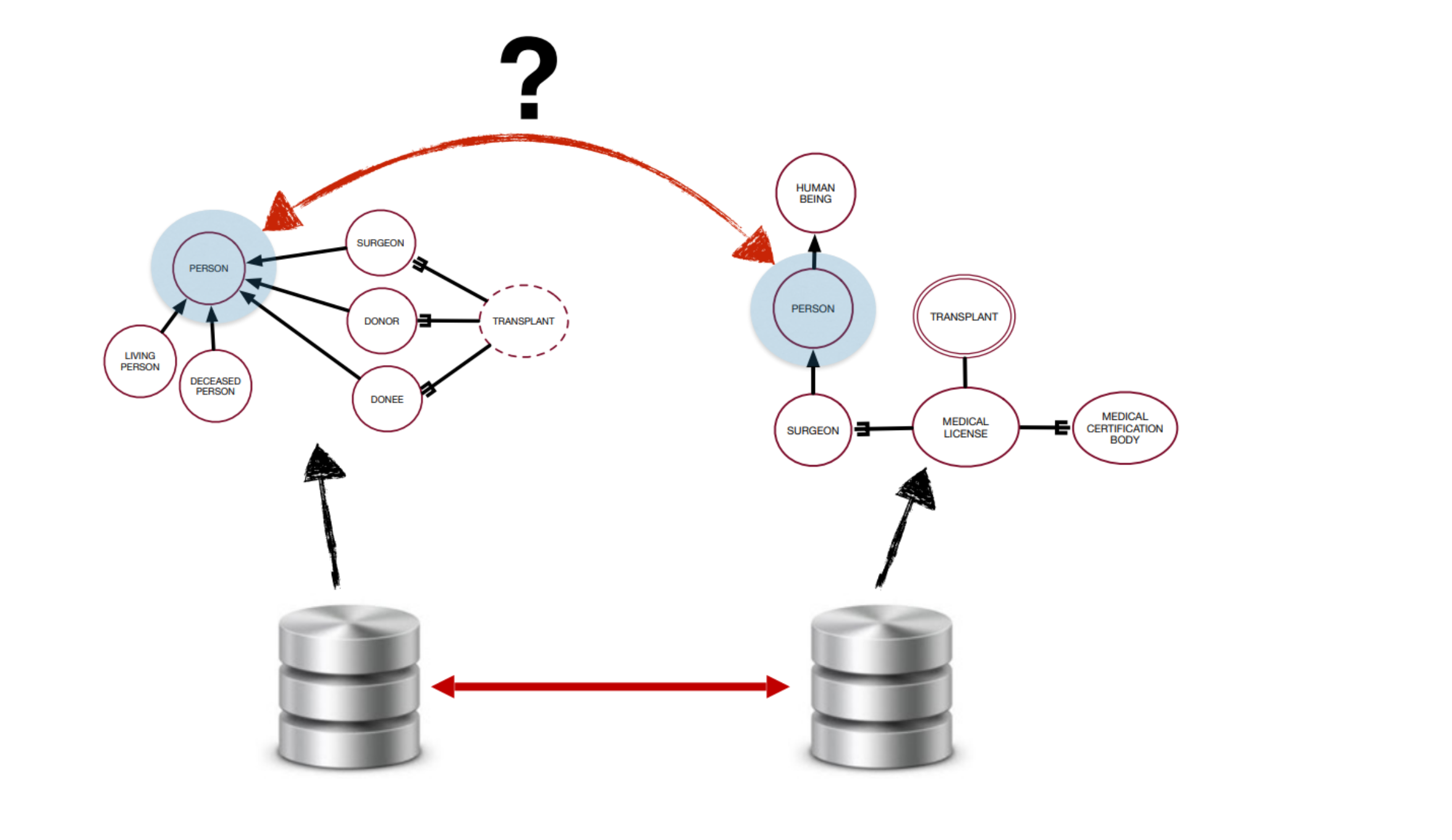
semantic interoperability
Semantic interoperability refers to the challenge or problem of ensuring that different systems not only exchange data but also interpret the meaning of that data in the same way. Achieving semantic interoperability means addressing this problem by aligning the meaning or context of data across systems.
In this sense, it’s about solving the issue of shared meaning—ensuring that terms, concepts, and relationships are understood consistently across systems, often through the use of ontologies or standards.
Example:
In healthcare, if one system records a diagnosis as “Myocardial Infarction” and another system understands it as “Heart Attack,” semantic interoperability ensures that both systems recognize these terms as referring to the same condition, even though they use different terms.